


Page 30 - SPEMD_60-4
P. 30
178                    rev port estomatol med dent cir maxilofac. 2019;60(4):175-188


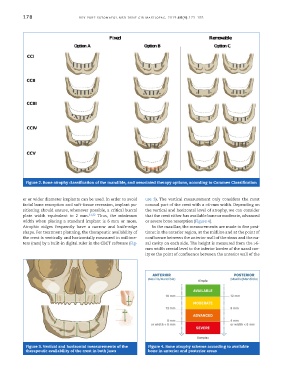
            Figure 2. Bone atrophy classification of the mandible, and associated therapy options, according to Carames Classification


           er or wider diameter implants can be used. In order to avoid   ure 3). The vertical measurement only considers the most
           facial bone resorption and soft-tissue recession, implant po-  coronal part of the crest with a >6-mm width. Depending on
           sitioning should ensure, whenever possible, a critical buccal   the vertical and horizontal level of atrophy, we can consider
           plate width equivalent to 2 mm. 31,32   Thus, the minimum   that the crest either has available bone or moderate, advanced
           width when placing a standard implant is 6 mm or more.   or severe bone resorption (Figure 4).
           Atrophic ridges frequently have a narrow and knife-edge   In the maxillae, the measurements are made in five posi-
           shape. For treatment planning, the therapeutic availability of   tions: in the anterior region, at the midline and at the point of
           the crest is vertically and horizontally measured in millime-  confluence between the anterior wall of the sinus and the na-
           ters (mm) by a built-in digital ruler in the CBCT software (Fig-  sal cavity on each side. The height is measured from the >6-
                                                              mm width crestal level to the inferior border of the nasal cav-
                                                              ity or the point of confluence between the anterior wall of the


            Figure 3. Vertical and horizontal measurements of the   Figure 4. Bone atrophy scheme according to available
            therapeutic availability of the crest in both jaws  bone in anterior and posterior areas

