


Page 12 - SPEMD_60-4
P. 12
160                    rev port estomatol med dent cir maxilofac. 2019;60(4):155-162


                                                              yl methacrylate (MMA) as the monomer. This similarity allows
                                                              a smooth diffusion of the reline monomers into the denture
                                                              base resin and forms a complex and strong network in the
                                                              interface. On the other hand, the lowest mean values of mi-
                                                              crotensile bond strength were obtained in both the control
                                                              and the 2.5%-CHX loaded Kooliner. This result may be due to
                                                              the composition of its monomer isobutyl methacrylate, a
                                                              high-molecular-weight monomer that makes the dissolution
                                                              of the PMMA in the denture base resin surface difficult and
                                                              leads to a less effective penetration of the reline resin into the
                                                                         24
                                                              denture base.  Similar results were found in previous studies
                                                              when the three resins were submitted to thermal aging con-
                                                              ditions. 27-30
                                                                 Loading the three reline acrylic resins with CHX did not
                                                              change their total surface energy after chemical aging. So, the
                                                              second hypothesis is not rejected. Similar results were found
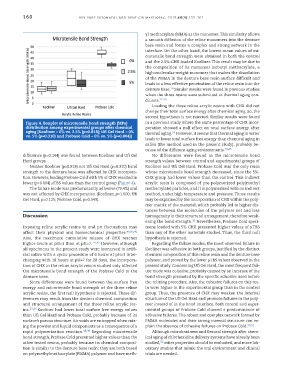
            Figure 4. Boxplot of microtensile bond strength (MPa)   in a previous study where the same percentage of CHX incor-
            distribution among experimental groups after chemical   poration showed a null effect on total surface energy after
            aging [Kooliner – 0% vs. 2.5% (p=0.818); Ufi Gel Hard – 0%   thermal aging.  However, it seems that thermal aging in water
                                                                         34
            vs. 5% (p=0.310) and Probase Cold – 0% vs. 5% (p=0.004)]
                                                              leads to lower total surface free energy than chemical aging in
                                                              saliva (the method used in the present study), probably be-
                                                              cause of the different aging environments. 34,35
           difference (p=0.144) was found between Kooliner and Ufi Gel   No differences were found in the microtensile bond
           Hard groups.                                       strength values between control and experimental groups of
             Neither Kooliner (p=0.818) nor Ufi Gel Hard (p=0.310) bond   Kooliner and Ufi Gel Hard. Probase Cold was the only resin
           strength to the denture base was affected by CHX incorpora-  whose microtensile bond strength decreased, since the 5%-
           tion. However, loading Probase Cold with 5% of CHX resulted in   CHX group had lower values than the control. This indirect
           lower (p=0.004) µTBS values than the control group (Figure 4).  acrylic resin is composed of pre-polymerized poly(methyl
             The failure mode was predominantly adhesive (79.4%) and   methacrylate) particles, and it is polymerized with an indirect
           was not affected by CHX incorporation (Kooliner, p=1.000; Ufi   method, under high temperature and pressure. Those results
           Gel Hard, p=0.125; Probase Cold, p=0.549).         may be explained by the incorporation of CHX within the poly-
                                                              mer matrix of the material, which probably led to higher dis-
                                                              tances between the molecules of the polymer net and less
           Discussion                                         homogeneity in their structural arrangement, therefore weak-
                                                                                  16
                                                              ening the bond strength.  Nevertheless, Probase Cold speci-
           Exposing reline acrylic resins to oral pH fluctuations may   mens loaded with 5% CHX presented higher values of μTBS
           affect their physical and biomechanical properties. 40,45,46    than any of the other materials studied. Thus, the third null
           Also, the maximum cumulative release of CHX reaches   hypothesis is rejected.
           higher levels at pH=3 than at pH=7.  31,47  However, although   Regarding the failure modes, the most observed failure in
           all specimens in the present study were immersed in artifi-  Kooliner was adhesive in both groups, justified by the distinct
           cial saliva with a cyclic procedure of 6 hours at pH=3 inter-  chemical composition of this reline resin and the denture base
           changing with 18 hours at pH=7 for 28 days, the incorpora-  polymer, and proved by the lower μTBS values observed in the
           tion of CHX in the reline acrylic resins studied only affected   present study. Concerning Ufi Gel Hard, the most frequent fail-
           the microtensile bond strength of the Probase Cold to the   ure mode was cohesive, probably caused by an increase of the
           denture base.                                      bond strength promoted by the specific adhesive used before
             Since differences were found between the surface free   the relining procedure. Also, the cohesive failures on this res-
           energy and microtensile bond strength of the three reline   in were higher in the experimental group than in the control
           acrylic resins, the first null hypothesis is rejected. These dif-  group. Thus, the presence of CHX may weaken the internal
           ferences may result from the distinct chemical composition   structure of the Ufi Gel Hard and promote failures in the poly-
           and structural arrangement of the three reline acrylic res-  mer instead of in the bond interface. Both control and exper-
           ins. 23,24  Kooliner had lower total surface free energy values   imental groups of Probase Cold showed a predominance of
           than Ufi Gel Hard and Probase Cold, probably because of its   adhesive failures. The robust and complex network formed by
           surface’s porous structure. Air voids are entrapped when mix-  PMMA molecules and their strong internal structure can ex-
           ing the powder and liquid components as a consequence of a   plain the absence of cohesive failures on Probase Cold. 50,51
           rapid polymerization reaction. 48,49  Regarding microtensile   Although microhardness and flexural strength after chem-
           bond strength, Probase Cold presented higher values than the   ical aging of chlorhexidine delivery systems have already been
                                                                    52
           other tested resins, probably because its chemical composi-  studied,  other properties should be evaluated, and more lab-
           tion is similar to the denture base resin: they are both based   oratory studies that mimic the oral environment and clinical
           on polymethylmethacrylate (PMMA) polymer and have meth-  trials are needed.

