


Page 10 - SPEMD_60-4
P. 10
158                    rev port estomatol med dent cir maxilofac. 2019;60(4):155-162


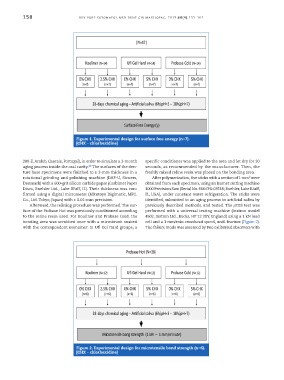
                                 Figure 1. Experimental design for surface free energy (n=7).
                                 [CHX – chlorhexidine]


           200-E, Aralab, Cascais, Portugal), in order to simulate a 3-month   specific conditioner was applied to the area and let dry for 30
                                      44
           aging process inside the oral cavity.  The surfaces of the den-  seconds, as recommended by the manufacturer. Then, the
           ture base specimens were finished to a 3-mm thickness in a   freshly mixed reline resin was placed on the bonding area.
                                                                                                         2
           rotational grinding and polishing machine (DAP-U, Struers,   After polymerization, five sticks with a section of 1 mm were
           Denmark) with a 600-grit silicon carbide paper (Carbimet Paper   obtained from each specimen, using an Isomet cutting machine
           Discs, Buehler Ltd., Lake Bluff, IL). Their thickness was con-  1000 Precision Saw (Serial No. 666-IPS-03518; Buehler, Lake Bluff,
           firmed using a digital micrometer (Mitutoyo Digimatic, MFG.  IL, USA), under constant water refrigeration. The sticks were
           Co., Ltd. Tokyo, Japan) with ± 0.01-mm precision.  identified, submitted to an aging process in artificial saliva by
             Afterward, the relining procedure was performed. The sur-  previously described methods, and tested. The μTBS test was
           face of the Probase Hot was previously conditioned according   performed with a universal testing machine (Instron model
           to the reline resin used. For Kooliner and Probase Cold, the   4502, Instron Ltd., Bucks, HP 12 3SY, England) using a 1 kN load
           bonding area was scrubbed once with a microbrush soaked   cell and a 1 mm/min crosshead speed, until fracture (Figure 2).
           with the correspondent monomer. In Ufi Gel Hard groups, a   The failure mode was assessed by two calibrated observers with


                                 Figure 2. Experimental design for microtensile bond strength (n=6).
                                 [CHX – chlorhexidine]

