


Page 59 - SPEMD_59-2
P. 59
rev port estomatol med dent cir maxilofac . 2018;59(2):115-118         117


                                                               rently presents a mean size of 3.93 cm in diameter. Patients
                                                               are usually in the sixth and seventh decade of life, with a mean
                                                               age of 59.1 years old, and are mainly males. 1,4,6,12,13  Studies
                                                               have reported that those tumors have a predilection for cos-
                                                               metically sensitive areas, including the nose and the eye-
                                                               lids. 8,14  Based on our literature analysis, the nose, the cheek
                                                               and the lower lip are the locations most commonly affected
                                                               by the head and neck giant KA.
                                                                 The histopathological diagnosis of KA is further compli-
                                                               cated by its histological similarities with the squamous cell
                                                               carcinoma. 2,3,5  Histopathological features vary with the stage
                                                                        3
                                                               of evolution.  An early lesion is reported to increase rapidly,
                                                               generating cell differentiation with a high proliferation index.
                                                               The analysis varies according to the atypical mitosis, loss of
                                                               polarity, individual cell keratinization and hyperchromatic
                                                               cells of the specimen. 2,3,11  It is possibly associated with the
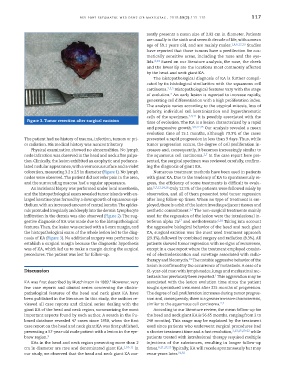
            Figure 3. Tumor resection after surgical excision  time of evolution. The KA is a lesion characterized by a rapid
                                                               and progressive growth. 4,6,11,15  Our analysis revealed a mean
                                                               evolution time of 15.1 months, although 73.3% of the cases
           The patient had no history of trauma, infection, tumors or pri-  presented a rapid progression in less than 3 days. Thus, while
           or radiation. His medical history was noncontributory.  tumor progression occurs, the degree of cell proliferation in-
              Physical examination showed no abnormalities. No lymph   creases and, consequently, it becomes increasingly similar to
           node infarction was observed in the head and neck after palpa-  the squamous cell carcinoma. 2,7  In the case report here pre-
           tion. Clinically, the lesion exhibited an exophytic and peduncu-  sented, the surgical specimen was reviewed carefully, confirm-
           lated nodular appearance, with a verrucous surface and a violet   ing the diagnosis of giant KA.
           coloration, measuring 3.2 x 2.5 in diameter (Figure 1). No lymph   Numerous treatment methods have been used in patients
           nodes were observed. The patient did not refer pain in the area,   with giant KA. Due to the tendency of KA to spontaneously re-
           and the surrounding mucosa had a regular appearance.  gress, the efficiency of some treatments is difficult to evalu-
              An incisional biopsy was performed under local anesthesia,   ate. 5,7,12,14,16  Only 12.5% of the patients were followed solely by
           and the histopathological exam revealed tumor islands with en-  observation, and all of them presented total tumor regression
           larged keratinocytes formed by a downgrowth of squamous epi-  after long follow -up times. When no type of treatment is em-
           thelium with an increased amount of central keratin. The epider-  ployed, there is a risk of the lesion invading adjacent tissues and
                                                                                 2,7
           mis protruded irregularly and deeply into the dermis. Lymphocyte   aesthetic commitment.  The non -surgical treatments mainly
           infiltration in the dermis was also observed (Figure 2). The sug-  used for the regression of the lesion were the intralesional in-
                                                                            17
           gestive diagnosis of KA was made due to the histopathological   terferon alpha 2a  and methotrexate. 6,18  Taking into account
           features. Then, the lesion was excised with a 1-mm margin, and   the aggressive biological behavior of the head and neck giant
           the histopathological exam of the whole lesion led to the diag-  KA, surgical excision was the most used treatment approach
           nosis of KA (Figure 3). No additional surgery was performed to   (29.1%), followed by combined surgery and radiation (8.3%). All
           establish a surgical margin because the diagnostic hypothesis   patients showed tumor regression with no signs of recurrence,
           was of KA, which led us to make a margin during the surgical   except in a case report where the treatment employed consist-
           procedures. The patient was lost for follow-up.     ed of electrodesiccation and curettage associated with radio-
                                                               therapy and bleomycin.  The notable aggressive behavior of the
                                                                                19
                                                               lesion is confirmed by the occurrence of metastasis. A case of a
           Discussion                                          61 -year -old man with lymph nodes, lungs and mediastinal me-
                                                                                           2
                                                               tastasis has previously been reported.  This aggravation may be
                                               8
           KA was first described by Hutchinson in 1889.  However, very   associated with the lesion evolution time since the patient
           few case reports and clinical series concerning the clinico-  sought specialized treatment after 325 months of progression.
           pathological features of the head and neck giant KA have   The degree of cell proliferation increases during tumor progres-
           been published in the literature. In this study, the authors re-  sion and, consequently, there is a greater invasive characteristic,
           viewed all  case reports  and clinical series  dealing with  the   similar to the squamous cell carcinoma. 2,7
           giant KA of the head and neck region, summarizing the most   According to our literature review, the mean follow -up for
           important aspects found by each author. A search in the Pu-  the head and neck giant KA is 56.65 months, ranging from 2 to
           bmed database revealed 47 cases since 1958, when the first   240 months). This range may be explained by the treatment
           case report on the head and neck giant KA was first published,   used since patients who underwent surgical procedures had
           presenting a 57-year-old male patient with a lesion in the eye-  a shorter treatment time and a fast resolution, 3,13,15,20-22  while
           brow region. 9                                      patients treated with intralesional therapy required multiple
              KAs in the head and neck region presenting more than 2   injections of the substances, resulting in longer follow -up
           cm in diameter are rare and denominated giant KA. 1,10-11  In   times. 6,11,17,23  Typically, KA will recede spontaneously but may
           our study, we observed that the head and neck giant KA cur-  recur years later. 31,32

