


Page 54 - SPEMD_60-4
P. 54
202                    rev port estomatol med dent cir maxilofac. 2019;60(4):197-204


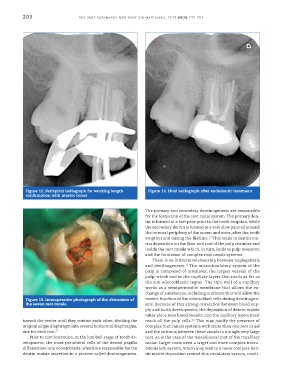
            Figure 12. Periapical radiograph for working length   Figure 14. Final radiograph after endodontic treatment
            confirmation with master cones


                                                              The primary and secondary dentinogenesis are responsible
                                                              for the formation of the root canal system. The primary den-
                                                              tin is formed at a fast pace prior to the tooth eruption, while
                                                              the secondary dentin is formed at a very slow pace all around
                                                              the internal periphery of the crown and roots, after the tooth
                                                                                        13
                                                              eruption and during the lifetime.  This leads to dentin ma-
                                                              trix deposition on the floor and roof of the pulp chamber and
                                                              inside the root canals which, in turn, leads to pulp recession
                                                              and the formation of complex root canals systems.
                                                                 There is an intimate relationship between angiogenesis
                                                              and dentinogenesis.  The microcirculatory system of the
                                                                               13
                                                              pulp is composed of arterioles, the largest vessels of the
                                                              pulp, which end in the capillary layers that reach as far as
                                                              the sub-odontoblastic region. The thin wall of a capillary
                                                              works as a semipermeable membrane that allows the ex-
                                                              change of substances, including nutrients that will allow the
            Figure 13. Intraoperative photograph of the obturation of   correct function of the odontoblast cells during dentinogen-
            the seven root canals                             esis. Because of this strong correlation between blood sup-
                                                              ply and tooth development, the deposition of dentin matrix
                                                              takes place near blood vessels, and the capillary layers must
           toward the center until they contact each other, dividing the   reach all the pulp cells.  This may justify the presence of
                                                                                 14
           original single diaphragm into several horizontal diaphragms,   complex root canals systems with more than one root canal
           one for each root. 12                              and the isthmus between these canals in a single very large
             Prior to root formation, at the late bell stage of tooth de-  root, as is the case of the mesiobuccal root of the maxillary
           velopment, the most peripheral cells of the dental papilla   molar. Larger roots need a larger and more complex micro-
           differentiate into odontoblasts, which are responsible for the   circulatory system, which may lead to a more complex den-
           dentin matrix secretion in a process called dentinogenesis.   tin matrix deposition around this circulatory system, result-

