


Page 53 - SPEMD_60-4
P. 53
rev port estomatol med dent cir maxilofac . 2019;60(4):197-204         201


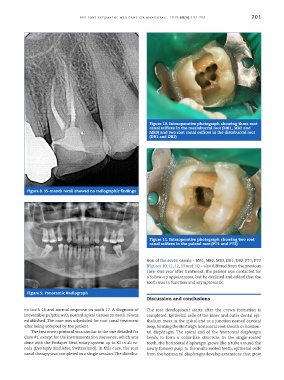
                                                                Figure 10. Intraoperative photograph showing three root
                                                                canal orifices in the mesiobuccal root (MB1, MB2 and
                                                                MB3) and two root canal orifices in the distobuccal root
                                                                (DB1 and DB2)


            Figure 8. 15-month recall showed no radiographic findings


                                                                Figure 11. Intraoperative photograph showing two root
                                                                canal orifices in the palatal root (PT1 and PT2)


                                                               tion of the seven canals – MB1, MB2, MB3, DB1, DB2, PT1, PT2
                                                               (Figures 10, 11, 12, 13 and 14) – also differed from the previous
                                                               case. One year after treatment, the patient was contacted for
                                                               a follow-up appointment, but he declined and added that the
                                                               tooth was in function and asymptomatic.

            Figure 9. Panoramic Radiograph
                                                               Discussion and conclusions

           on tooth 16 and normal response on tooth 17. A diagnosis of   The root development starts after the crown formation is
           irreversible pulpitis with normal apical tissues on tooth 16 was   completed. Epithelial cells of the inner and outer dental epi-
           established. The case was scheduled for root canal treatment   thelium meet in the apical end at a junction named cervical
           after being accepted by the patient.                loop, forming the Hertwig’s horizontal root sheath or horizon-
              The treatment protocol was similar to the one detailed for   tal diaphragm. The apical end of the horizontal diaphragm
           Case #1, except for the instrumentation sequence, which was   bends to form a collar-like structure. In the single-rooted
           done with the Protaper Next rotary system up to X2 in all ca-  teeth, the horizontal diaphragm grows like a tube around the
           nals (Dentsply Maillefer, Switzerland). In this case, the root   newly formed pulp. In the multi-rooted teeth, epithelial cells
           canal therapy was completed in a single session. The distribu-  from the horizontal diaphragm develop extensions that grow

