


Page 47 - SPEMD_62-3
P. 47
rev port estomatol med dent cir maxilofac . 2021;62(3):170-175         173


                                                                                     9
                                                               an altered bone metabolism. There is also the theory of syno-
                                                               vial cysts arising from an error in the ossification process,
                                                                                                            2
                                                               where a synovial lining would occur in the affected region. In
                                                               the theory of tumor degeneration, a pathological alteration
                                                               such as fibrous dysplasia and central granuloma of giant cells
                                                               would result in SBC after their liquefaction process. 8,9,13
                                                                 A retrospective study of 44 cases of SBC, pointed out a pos-
                                                               sible combination of these lesions with orthodontic treatment
                                                               and some cases associated with florid bone cement dysplasia
                                                                    9
                                                               (DCOF). In this case, there is a misfunction in bone metabo-
                                                               lism leading to biochemical and hormonal changes resulting
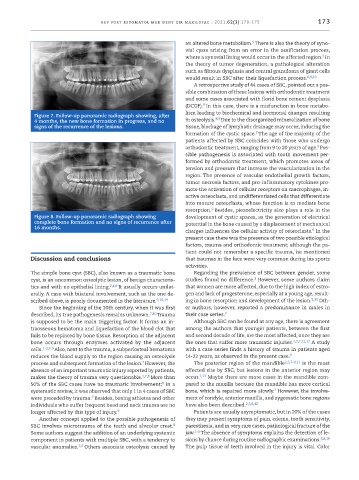
            Figure 7. Follow-up panoramic radiograph showing, after      8,9
            4 months, the new bone formation in progress, and no   in osteolysis.  Due to the disorganized mineralization of bone
            signs of the recurrence of the lesions.            tissue, blockage of lymphatic drainage may occur, inducing the
                                                                                      7
                                                               formation of the cystic space. The age of the majority of the
                                                               patients affected by SBC coincides with those who undergo
                                                                                                          9
                                                               orthodontic treatment, ranging from 9 to 20 years of age. Pos-
                                                               sible pathogenesis is associated with tooth movement per-
                                                               formed by orthodontic treatment, which promotes areas of
                                                               tension and pressure that increase the vascularization in the
                                                               region. The presence of vascular endothelial growth factors,
                                                               tumor necrosis factors, and pro-inflammatory cytokines pro-
                                                               mote the activation of cellular receptors on macrophages, in-
                                                               active osteoclasts, and undifferentiated cells that differentiate
                                                               into mature osteoclasts, whose function is to mediate bone
                                                                       9
                                                               resorption. Besides, piezoelectricity also plays a role in the
            Figure 8. Follow-up panoramic radiograph showing   development of cystic spaces, as the generation of electrical
            complete bone formation and no signs of recurrence after   potential in the bone caused by a displacement of mechanical
            16 months.
                                                                                                         9
                                                               charges influences the cellular activity of osteoclasts.  In the
                                                               present case there was the presence of two possible etiological
                                                               factors, trauma and orthodontic treatment; although the pa-
                                                               tient could not remember a specific trauma, he mentioned
           Discussion and conclusions                          that traumas in the face were very common during his sports
                                                               activities.
           The simple bone cyst (SBC), also known as a traumatic bone   Regarding the prevalence of SBC between gender, some
                                                                                     3
           cyst, is an uncommon osteolytic lesion, of benign characteris-  studies found no difference. However, some authors claim
           tics and with no epithelial lining. 2,4,9  It usually occurs unilat-  that women are more affected, due to the high index of estro-
           erally. A case with bilateral involvement, such as the one de-  gen and lack of progesterone, especially at a young age, result-
           scribed above, is poorly documented in the literature. 9,10,14  ing in bone resorption and development of the lesion. 9,10  Oth-
              Since the beginning of the 20th century, when it was first   er authors, however, reported a predominance in males in
           described, its true pathogenesis remains unknown. 7,10  Trauma   their case series. 7
           is supposed to be the main triggering factor. It forms an in-  Although SBC can be found at any age, there is agreement
           traosseous hematoma and liquefaction of the blood clot that   among the authors that younger patients, between the first
           fails to be replaced by bone tissue. Resorption of the adjacent   and second decade of life, are the most affected, once they are
           bone occurs through enzymes activated by the adjacent   the ones that suffer more traumatic injuries. 1,3,7,11,12  A study
           cells. 1-3,7-9  Also, next to the trauma, a subperiosteal hematoma   with a case series finds a history of trauma in patients aged
           reduces the blood supply to the region causing an osteolysis   14-22 years, as observed in the present case. 9
                                                2
           process and subsequent formation of the lesion. However, the   The posterior region of the mandible 2,3,7-9,11  is the most
           absence of an important traumatic injury reported by patients,   affected site by SBC, but lesions in the anterior region may
           makes the theory of trauma very questionable. 1,7,8  More than   occur. 7,13  Maybe there are more cases in the mandible com-
                                                       8
           50% of the SBC cases have no traumatic involvement;  in a   pared to the maxilla because the mandible has more cortical
                                                                                            7
           systematic review, it was observed that only 1 in 4 cases of SBC   bone, which is repaired more slowly. However, the involve-
                               3
           were preceded by trauma.  Besides, boxing athletes and other   ment of condyle, anterior maxilla, and zygomatic bone regions
           individuals who suffer frequent head and neck trauma are no   have also been described. 2,3,9,12
           longer affected by this type of injury. 9             Patients are usually asymptomatic, but in 20% of the cases
              Another concept applied to the possible pathogenesis of   they may present symptoms of pain, edema, tooth sensitivity,
                                                          8
           SBC involves microtrauma of the teeth and alveolar crest.    paresthesia, and in very rare cases, pathological fracture of the
           Some authors suggest the addition of an underlying systemic   jaw. 1-3  The absence of symptoms explains the detection of le-
           component in patients with multiple SBC, with a tendency to   sions by chance during routine radiographic examinations. 3,8,10
           vascular anomalies. 2,8  Others associate osteolysis caused by   The pulp tissue of teeth involved in the injury is vital. Color

