


Page 9 - SPEMD_62-1
P. 9
rev port estomatol med dent cir maxilofac . 2021;62(1):1-8               3


                6,9
           cians.  Although PTG SX replica -like instruments are already   tion was performed with a dental operating microscope (Opmi
           available in the market, there is currently no scientific support   Pico, Carl Zeiss Surgical, Germany) under a 3.4x and 13.6x mag-
           regarding their characteristics and safety.         nification to analyze the following characteristics: (a) number
              Considering the lack of knowledge on PTG SX replica -like   of blades in the active area (measured in units); (b) helix angle
           instruments, a multimethod research was conducted to assess   average in the active area (measured in degrees). A photo was
           their design, metallurgic features, torsional strength, and flex-  taken perpendicular to the long axis of the instruments using
           ibility. The null hypothesis to be tested was that there was no   a Canon EOS 500D camera (Canon, Tokyo, Japan) and trans-
           difference between the SX replica -likes and the original Pro-  ferred in the jpeg format to the ImageJ software (Laboratory
           Taper instruments regarding design, torsional strength, and   for Optical and Computational Instrumentation [LOCI], Wis-
           flexibility.                                        consin, USA). In ImageJ, the six most coronal helix angles were
                                                               measured three times and averaged, and (c) major defects or
                                                               deformations such as distorted, missing, or twisted blades,
           Material and Methods                                were identified. High -magnification analysis was conducted
                                                               on a conventional scanning electron microscope (SEM) Hitachi
           Ninety -three SX NiTi instruments of two replica -like (Premi-  S -2400 (Hitachi, Tokyo, Japan) to qualitatively assess the fol-
           um Taper Gold and Go -Taper Flex) rotary systems that repli-  lowing: (a) blade spiral design (symmetrical or asymmetrical,
           cate the premium brand ProTaper Gold (Table 1, Figure 1) were   with or without radial lands); (b) instrument’s tip (active or
           assessed regarding their design, nickel -titanium (NiTi) com-  non -active tip); (c) cross -sectional geometry; (d) surface marks
           position, phase transformation temperatures, and torsional   associated with a possible machined production process; (e)
           and bending strengths. The replica -like systems for the pres-  minor defects or deformations.
           ent study were selected according to a previously reported   Two laboratory tests were performed for metallurgical
           definition. 8                                       characterization: energy -dispersive X -ray spectroscopy (EDS/
              Six random new instruments were selected in each group   SEM) and differential scanning calorimetry (DSC). In EDS/
           for design assessment. The stereomicroscopic visual inspec-  SEM, three new SX instruments per group were analyzed us-
                                                               ing a conventional SEM (Hitachi S -2400; Hitachi, Tokyo, Ja-
                                                               pan) equipped with an energy -dispersive X -ray spectrometer
                                                               with light elements detector (Bruker Quantax, Bruker Corpo-
                                                               ration, Billerica, MA, USA). Before this analysis, all instru-
                                                               ments had their surface cleaned by immersion on an acetone
                                                               bath for 2 minutes and were mounted on a sample holder
                                                               placed in the microscope chamber. The vacuum was created
                                                               for approximately 10 minutes. As for the operative setting
                                                               conditions, the acceleration voltage was 20 kilovolts, and the
                                                               filament current was 3.1 amp at a 25 -mm work distance on
                                                                                   2
                                                               a surface area of 400 µm . Results were assessed using the
                                                               Sigma Scan software (Systat Software Inc., San Jose, CA) and
                                                               the proportions of nickel and titanium were obtained by a
                                                               typical spectrum.
                                                                 The DSC test was carried out in two different instruments
                                                               of each system following the American Society for Testing and
                                                                               10
                                                               Materials’ guidelines.  It was performed on 3 to 5 -mm frag-
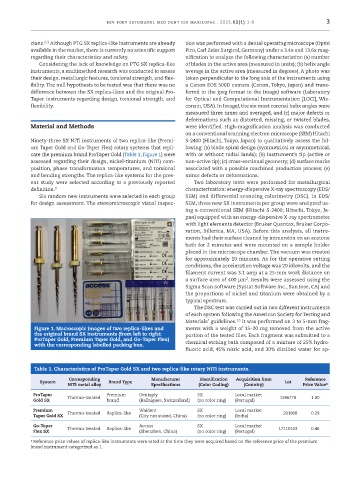
            Figure 1. Macroscopic images of two replica -likes and   ments with a weight of 15–20 mg removed from the active
            the original brand SX instruments (from left to right:   portion of the tested files. Each fragment was submitted to a
            ProTaper Gold, Premium Taper Gold, and Go -Taper Flex)
            with the corresponding labelled packing box.       chemical etching bath composed of a mixture of 25% hydro-
                                                               fluoric acid, 45% nitric acid, and 30% distilled water for ap-


            Table 1. Characteristics of ProTaper Gold SX and two replica -like rotary NiTi instruments.
                        Corresponding              Manufacturer    Identification   Acquisition from  Reference
              System                 Brand Type                                                Lot           a
                       NiTi metal alloy            Specifications  (Color Coding)  (Country)         Price Value
            ProTaper                Premium    Dentsply           SX           Local market
            Gold SX    Thermo -treated  brand  (Ballaigues, Switzerland)  (no color ring)  (Portugal)  1546778  1.00
            Premium    Thermo -treated  Replica -like  Waldent    SX           Local market       201808  0.29
            Taper Gold SX                      (City not stated, China)  (no color ring)  (India)

            Go -Taper    Thermo -treated  Replica -like  Access    SX          Local market   17110103  0.46
            Flex SX                            (Shenzhen, China)  (no color ring)  (Portugal)
           a  Reference price values of replica -like instruments were rated at the time they were acquired based on the reference price of the premium
           brand instrument categorized as 1.

