


Page 61 - SPEMD_61-3
P. 61
rev port estomatol med dent cir maxilofac . 2020;61(3):148-153         151


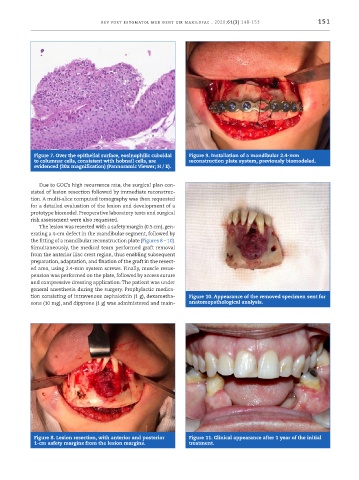
            Figure 7. Over the epithelial surface, eosinophilic cuboidal   Figure 9. Installation of a mandibular 2.4 -mm
            to columnar cells, consistent with hobnail cells, are   reconstruction plate system, previously biomodeled.
            evidenced (30x magnification) (Pannoramic Viewer; H / E).


              Due to GOC’s high recurrence rate, the surgical plan con-
           sisted of lesion resection followed by immediate reconstruc-
           tion. A multi -slice computed tomography was then requested
           for a detailed evaluation of the lesion and development of a
           prototype biomodel. Preoperative laboratory tests and surgical
           risk assessment were also requested.
              The lesion was resected with a safety margin (0.5 cm), gen-
           erating a 4 -cm defect in the mandibular segment, followed by
           the fitting of a mandibular reconstruction plate (Figures 8 – 10).
           Simultaneously, the medical team performed graft removal
           from the anterior iliac crest region, thus enabling subsequent
           preparation, adaptation, and fixation of the graft in the resect-
           ed area, using 2.4 -mm system screws. Finally, muscle resus-
           pension was performed on the plate, followed by access suture
           and compressive dressing application. The patient was under
           general anesthesia during the surgery. Prophylactic medica-
           tion consisting of intravenous cephalothin (1 g), dexametha-  Figure 10. Appearance of the removed specimen sent for
           sone (10 mg), and dipyrone (1 g) was administered and main-  anatomopathological analysis.


            Figure 8. Lesion resection, with anterior and posterior   Figure 11. Clinical appearance after 1 year of the initial
            1 -cm safety margins from the lesion margins.       treatment.

