


Page 60 - SPEMD_60-4
P. 60
208                    rev port estomatol med dent cir maxilofac. 2019;60(4):205-209


                                                              Discussion and conclusions
                                                              The cells that originate trichilemmoma appear to be locat-
                                                              ed  in  a  superficial area of the hair follicle, just below the
                                                              basement membrane, at the level of the sebaceous gland.
                                                              There is a lobular proliferation of small uniform cells to the
                                                              dermis from the epidermis, and the presence of clear cells
                                                              containing glycogen is the most notable alteration. 1-4
                                                                 The relationship between trichilemmoma and common
                                                              wart is controversial, and  trichilemmomas  are actually  often
                                                              clinically diagnosed as warts. On the other hand, areas his-
                                                              tologically similar to trichilemmomas are often found in warts.
                                                              Some authors, therefore, believe that trichilemmomas may
                                                              correspond to mere mature warts, with some period of evolu-
                                                                                                       9
                                                              tion, that have suffered trichilemmal differentiation.  Howev-
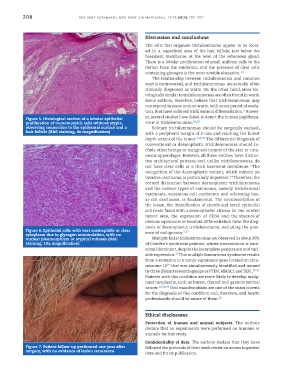
            Figure 5. Histological section of a lobular epithelial   er, several studies have failed to detect the human papilloma-
            proliferation of monomorphic cells without atypia,   virus in trichilemmomas. 28,29
            observing connection to the epidermal surface and a   Solitary trichilemmomas should be surgically excised,
            hair follicle (H&E staining, 4x magnification)    with a peripheral margin of 2 mm and reaching the fullest
                                                              depth extent of the tumor. 4,30,31  The differential diagnosis of
                                                              conventional or desmoplastic trichilemmomas should in-
                                                              clude other benign or malignant tumors of the skin or cuta-
                                                              neous appendages. However, all these entities have distinc-
                                                              tive architectural patterns and, unlike trichilemmomas, do
                                                                                                          3
                                                              not have clear cells or a thick basement membrane.  The
                                                              recognition of the desmoplastic variant, which mimics an
                                                                                                 14
                                                              invasive carcinoma, is particularly important.  Therefore, the
                                                              correct distinction between desmoplastic trichilemmoma
                                                              and the various types of carcinoma, namely trichilemmal
                                                              carcinoma, squamous-cell carcinoma and sclerosing bas-
                                                              al-cell carcinoma,  is fundamental. The circumscription of
                                                              the lesion, the identification of chords and small epithelial
                                                              cell nests fused with a desmoplastic  stroma  in  the  central
                                                              tumor area, the expression of CD34 and the absence of
                                                              obvious squamous or basaloid differentiation favor the diag-
                                                              nosis of desmoplastic trichilemmoma, excluding the pres-
            Figure 6. Epithelial cells with vast eosinophilic or clear        3,32
            cytoplasm due to glycogen accumulation, with no   ence of malignancy.
            nuclear pleomorphism or atypical mitoses (H&E        Multiple facial trichilemmomas are observed in about 99%
            staining, 10x magnification)                      of Cowden’s syndrome patients, whose transmission is auto-
                                                              somal dominant, despite the incomplete penetrance and vari-
                                                                          33
                                                              able expression.  This multiple hamartoma syndrome results
                                                              from a mutation in a tumor suppressor gene located on chro-
                                                                       34
                                                              mosome 10  that was simultaneously identified and named
                                                              by three distinct research groups as PTEN, MMAC1 and TEP1. 35-37
                                                              Patients with this condition are more likely to develop malig-
                                                              nant neoplasms, such as breast, thyroid and gastrointestinal
                                                              cancer. 10,38,39  Oral manifestations are one of the main criteria
                                                              for the diagnosis of this condition and, therefore, oral health
                                                              professionals should be aware of them. 10


                                                              Ethical disclosures
                                                              Protection of human and animal subjects. The  authors
                                                              declare that no experiments were performed on humans or
                                                              animals for this study.

                                                              Confidentiality of data. The authors declare that they have
            Figure 7. Patient follow-up performed one year after   followed the protocols of their work center on access to patient
            surgery, with no evidence of lesion recurrence
                                                              data and for its publication.

