


Page 40 - SPEMD_60-3
P. 40
128                    rev port estomatol med dent cir maxilofac. 2019;60(3):125-129


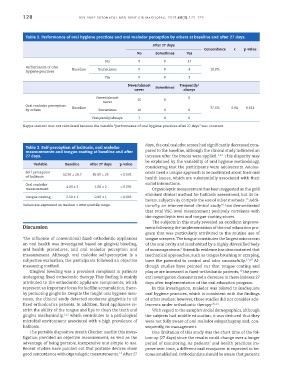
            Table 2. Performance of oral hygiene practices and oral malodor perception by others at baseline and after 27 days.
                                                                 After 27 days
                                                                                       Concordance  κ  p-value
                                                          No      Sometimes    Yes

                                             No            0          0         33
            Performance of oral
            hygiene practices  Baseline   Sometimes        0          0         4        10.0%
                                             Yes           0          0         3
                                                       Never/almost         Frequently/
                                                         never    Sometimes   always
                                         Never/almost                           0
                                            never          15         0
            Oral malodor perception   Baseline                                           37.5%    0.04  0.613
            by others                     Sometimes        10         0         0
                                        Frequently/always  7          8         0
           Kappa statistic was not calculated because the variable “performance of oral hygiene practices after 27 days” was constant.


                                                              days, the oral malodor scores had significantly decreased com-
            Table 3. Self-perception of halitosis, oral malodor
            measurements and tongue coating at baseline and after   pared to the baseline, although the clinical study indicated an
            27 days.                                          increase after the braces were applied. 3,13   This disparity may
                                                              be explained by the variability of oral hygiene methodology,
               Variable     Baseline   After 27 days  p-value
                                                              considering that the participants were adolescents. Adoles-
            Self perception                                   cents need a unique approach to be motivated about their oral
            of halitosis   52.50 ± 28.7  85.00 ± 25  < 0.001  health issues, which are substantially associated with their
            Oral malodor     4.00 ± 2    1.00 ± 2   < 0.001   social interactions.
            measurement                                          Organoleptic measurement has been suggested as the gold
                                                              standard clinical method for halitosis assessment, but its in-
            Tongue coating   2.50 ± 1    0.00 ± 1   < 0.001
                                                                                                        15
                                                              herent subjectivity compels the use of other methods.  Addi-
           Values are expressed as median ± interquartile range.  tionally, an interventional clinical study  has demonstrated
                                                                                              16
                                                              that total VSC-level measurement positively correlates with
                                                              the organoleptic test and tongue-coating scores.
                                                                 The subjects in this study revealed an excellent improve-
           Discussion                                         ment following the implementation of the oral education pro-
                                                              gram that was particularly attributed to the routine use of
           The influence of conventional fixed orthodontic appliances   tongue scrapers. The tongue constitutes the largest microcosm
           on oral health was investigated based on gingival bleeding,   of the oral cavity and is inhabited by a highly-diversified body
                                                                             9
           oral health procedures, and oral malodor perception and   of microorganisms.  Scientific evidence has demonstrated that
           measurement.  Although oral malodor self-perception is a   mechanical approaches, such as tongue brushing or scraping,
           subjective evaluation, the participants followed an objective   have the potential to control oral odor successfully. 17,18  Al-
           measuring method.                                  though  studies  have pointed out  that  tongue  coating and
             Gingival bleeding was a prevalent complaint in patients   plaque are increased in fixed-orthodontic patients,  the pres-
                                                                                                     19
           undergoing fixed orthodontic therapy. This finding is mainly   ent investigation demonstrated a decrease in those indexes 27
           attributed to the orthodontic appliance components, which   days after implementation of the oral education program.
           represent an important focus for biofilm accumulation, there-  In this investigation, malodor was related to inadequate
           by promoting gingivitis. Despite the taught oral hygiene mea-  oral hygiene practices, which is consistent with the findings
           sures, the clinical study detected moderate gingivitis in all   of other studies; however, those studies did not consider ado-
           fixed orthodontics patients. In addition, fixed appliances re-  lescents under orthodontic therapy. 20,21
           strict the ability of the tongue and lips to clean the teeth and   With regard to the sample’s social demographics, although
           gingiva mechanically, 1,12  which contributes to a pathological   the subjects had middle education, it was deduced that they
           microbial environment associated with a high prevalence of   were not fully aware of oral malodor etiopathogeny and, con-
           halitosis.                                         sequently, its management.
             The portable dispositive Breath Checker used in this inves-  One limitation of this study was the short time of the fol-
           tigation provided an objective measurement, as well as the   low-up (27 days) since the results could change over a longer
           advantage of being portable, inexpensive and simple to use.   period of monitoring. As patients’ oral health practices im-
           Recent studies have pointed out that portable devices show   prove over time, a different oral ecosystem is expected to be-
                                                   14
           good concordance with organoleptic measurements.  After 27   come established. Orthodontists should be aware that patients

