


Page 29 - SPEMD_59-1
P. 29
rev port estomatol med dent cir maxilofac . 2018;59(1):18-23             21


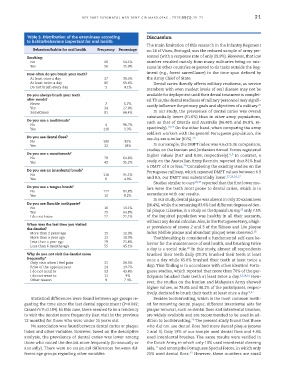
            Table 3. Distribution of the examinees according    Discussion
            to habits/behaviors important for oral health
                                                               The main limitation of this research in the Infantry Regiment
               Behaviors/habits for oral health  Frequency  Percentage  no.14 of Viseu, Portugal, was the reduced sample of army per-
            Smoking:                                           sonnel (with a response rate of only 29.9%). However, that low
              No                             66      54.1%     number resulted mainly from many militaries being on mis-
              Yes                            56      45.9%     sions in other countries or posted to do tasks outside the Reg-
            How often do you brush your teeth?                 iment (e.g., forest surveillance) in the time span defined by
              At least once a day            37      30.3%     the Army Chief of State.
              At least twice a day           80      65.6%       Dental caries directly affects military readiness, as service
              Do not brush every day         5       4.1%
                                                               members with even modest levels of oral disease may not be
            Do you always brush your teeth                     available for deployment until their dental treatment is complet-
            after meals?                                       ed. Thus, the dental readiness of military personnel may signifi-
              Never                          7       5.7%      cantly influence the primary goals and objectives of a military. 22
              Yes                            34      27.9%
              Sometimes                      81      66.4%       In our study, the prevalence of dental caries was overall
                                                               substantially lower (51.6%) than in other army populations,
            Do you use a toothbrush?                           such as that of Croatia and Australia (96.46% and 84.8%, re-
              No                             4       96.7%             10,23
              Yes                           118      3.3%      spectively).   On the other hand, when comparing the army
                                                               soldiers workers with the general Portuguese population, the
            Do you use dental floss?                           results are similar (61%). 13
              No                            100      82%
              Yes                            22      18%         In our sample, the DMFT index was 4.6±3.5. In comparison,
                                                               studies on the Iranian and Jordanian Armed Forces registered
            Do you use a mouthwash?                            higher values (9.67 and 8.69, respectively). 6,9  In contrast, a
              No                             79      64.8%
              Yes                            43      35.2%     study on the Australian Army Recruits reported that 81% had
                                                                              24
                                                               a DMFT of 6 or less. Considering the existing studies on the
            Do you use an interdental brush?                   Portuguese military, which reported DMFT values between 6.3
              No                            116      95.1%                                      13,14,16,17
              Yes                            6       4.9%      and 8.5, our DMFT was substantially lower.
                                                                 Studies similar to ours 10,17  reported that the first lower mo-
            Do you use a tongue brush?                         lars were the teeth most prone to dental caries, which is in
              No                            112      91.8%
              Yes                            10      8.2%      accordance with our results.
                                                                 In our study, dental plaque was absent in only 20 examinees
            Do you use fluoride toothpaste?                    (16.4%), while the remaining 83.6% had different degrees of den-
              No                             16      13.1%                                            25
              Yes                            79      64.8%     tal plaque. Likewise, in a study on the Spanish Army,  only 7.5%
              I do not know                  27      22.1%     of the inquired population was healthy in all their sextants,
                                                               without any dental calculus. Also, in the Portuguese Navy, a high-
            When was the last time you visited
            the dentist?                                       er prevalence of scores 2 and 3 of the Silness and Löe plaque
              More than 2 years ago          15      12.3%     index (visible plaque and abundant plaque) were observed. 16
              More than a year ago           23      18.9%       Toothbrushing is considered a fundamental self-care be-
              Less than a year ago           29      23.8%     havior for the maintenance of oral health, and brushing twice
              Less than 6 months ago         55      45.1%
                                                                               26
                                                               a day is a social rule.  In this study, almost all respondents
            Why do you not visit the dentist more              brushed their teeth daily (30.3% brushed their teeth at least
            frequently?                                        once a day while 65.6% brushed their teeth at least twice a
              Only visit when I feel pain    25      20.5%
              Price of the appointment       24      19.7%     day). This finding is in accordance with other identical Portu-
              I do not need to               53      43.4%     guese studies, which reported that more than 70% of the par-
              I do not want to               11       9%       ticipants brushed their teeth at least twice a day. 13,14,16  How-
              Other reason                   9       7.4%
                                                               ever, the studies on the Iranian and Malaysian Army showed
                                                               higher values, as 78.8% and 98.2% of the participants, respec-
                                                               tively, declared to brush their teeth at least once a day. 9,27
              Statistical differences were found between age groups re-  Besides toothbrushing, which is the most common meth-
           garding the time since the last dental appointment (P=0.042;   od for removing dental plaque, different interdental aids for
           Cramér’s V=0.184). In this case, there seemed to be a tendency   plaque removal, such as dental floss and interdental brushes,
           to visit the dentist more frequently (last visit in the previous   are widely available and are recommended to be used in ad-
                                                                                 28
           12 months) for those who were under 25 years old.   dition to toothbrushing.  The present study found that those
              No association was found between dental caries or plaque   who did not use dental floss had more dental plaque (scores
           index and other variables. However, based on the descriptive   2 and 3). Only 18% of our sample used dental floss and 4.9%
           analysis, the prevalence of dental caries was lower among   used interdental brushes. The same results were verified in
           those who visited the dentist more frequently (bi-annually or   the Dutch Army, in which only 13% used interdental cleaning
           annually). There were no statistical differences between dif-  aids, and among the Portuguese Special Forces, in which only
                                                                  11
                                                                                 13
           ferent age groups regarding other variables.        25% used dental floss.  However, these numbers are small

