


Page 27 - SPEMD_58-4
P. 27
rev port estomatol med dent cir maxilofac . 2017;58(4):212-218         215


           presence/absence of signs of inflammation in the mucosa   mulated in response to a theoretical model of oral health, and
           around it (such as redness, dehiscence or altered form), pain   provides scores ranging from 0 to 56, with higher scores indi-
           on percussion and mobility (yes/no).                cating a poorer quality of life. 24
              Sialometry was performed to measure the overall saliva   In addition, overall patient satisfaction with implant-su-
           at rest using the drainage technique. Patients were instruc-  pported prostheses was assessed in terms of aesthetics and
           ted not to eat, drink, smoke, chew, or perform oral hygiene   masticatory function, using a visual analog scale (VAS) scoring
           in the 60 min before the saliva collection using the drainage   0-10 (0 = completely dissatisfied; 10 = extremely satisfied). Sub-
           technique. 22                                       jects were asked to mark a vertical line through a 10-cm hori-
              Samples were collected following a standardized 15-minu-  zontal line to indicate their level of satisfaction.
           te procedure between 9 a.m. and 12 p.m., and an unstimulated   Data were analyzed using the SPSS 19.0 statistics pro-
                                                                        ®
           salivary flow of ≤1.5mm/15 min was considered positive.  gram (SPSS  Inc, Chicago, IL, USA). A descriptive study was
                                           23
              The Thompson Xerostomia Inventory  was applied to as-  made for each variable. The Kolmogorov-Smirnov normality
           sess xerostomia symptoms; the inventory consists of 11 items   test and Levene’s homogeneity of variance test were applied;
           referring to the four weeks previous to the conduction of the   data showed a skewed distribution, and so were analyzed
           test and evaluates the frequency of dry mouth symptoms.  using a non-parametric ranking test. The associations be-
              Patients’ quality of life was assessed using the OHIP-14   tween the different qualitative variables were studied using
           (Oral Health Impact Profile) questionnaire (Spanish version),   Pearson’s chi-square test. A p≤0.05 was accepted as statisti-
           which consists of 14 questions assessing seven domains for-  cally significant.


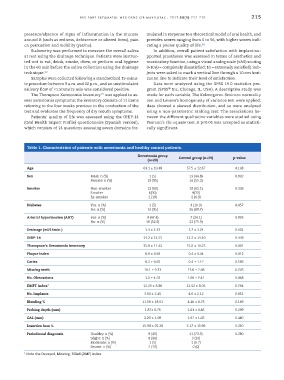
            Table 1. Characteristics of patients with xerostomia and healthy control patients.
                                                           Xerostomia group   Control group (n=29)  p-value
                                                               (n=20)
            Age                                              63.1 ± 10.48      57.5 ± 12.67         0.108
            Sex                        Male: n (%)              1 (5)           13 (44.8)           0.002
                                       Female: n (%)           19 (95)          16 (55.2)
            Smoker                     Non-smoker              12 (60)          18 (62.1)           0.339
                                       Smoker                  6(30)              9(31)
                                       Ex-smoker               2 (10)            2 (6.9)
            Diabetes                   Yes: n (%)               1 (5)            3 (10.3)           0.457
                                       No: n (%)               19 (95)          26 (89.7)
            Arterial hypertension (AHT)  Yes: n (%)            9 (47.4)          7 (24.1)           0.095
                                       No: n (%)              10 (52.6)         22 (75.9)
            Drainage (ml/15min )                              1.4 ± 1.43        3.7 ± 1.24          0.001

            OHIP-14                                          14.2 ± 11.55      11.2 ± 14.40         0.449
            Thompson’s Xerostomia Inventory                  35.9 ± 11.42      15.8 ± 10.23         0.001
            Plaque index                                      0.9 ± 0.58        0.4 ± 0.44          0.012
            Caries                                            0.3 ± 0.65        0.4 ± 1.12          0.586
            Missing teeth                                     10.1 ± 9.13       11.0 ± 7.08         0.743
            No. Obturations                                   3.0 ± 4.26        1.00 ± 1.41         0.068
            DMFT index*                                      13.25 ± 8.80      12.52 ± 8.03         0.764
            No. Implants                                      3.60 ± 2.45       4.6 ± 2.12          0.851
            Bleeding %                                       11.58 ± 18.01      4.46 ± 8.75         0.169
            Probing depth (mm)                                1.87± 0.76        1.61 ± 0.86         0.299
            CAL (mm)                                          2.25 ± 1.08       1.97 ± 1.03         0.440
            Insertion loss %                                 15.90 ± 25.30     7.17 ± 15.96         0.250

            Periodontal diagnosis      Healthy: n (%)          9 (45)           11 (73.3)           0.280
                                       Slight: n (%)           8 (40)            3 (20)
                                       Moderate: n (%)          1 (5)            1 (6.7)
                                       Severe: n (%)           2 (10)             0 (0)
           * Note the Decayed, Missing, Filled (DMF) index

