


Page 21 - SPEMD_67-1
P. 21
rev port estomatol med dent cir maxilofac . 2026;67(1):11-20             15


                          100
                            90                                                            81.1

                            80                    63.6
                            70
                         Frequency (%)  60


                            50
                            40

                            30
                            20       25.0                      22.5          19.4
                            10

                             0
                                 In the morning, In the morning,  After lunch  After dinner  Before going to
                                 before breakfast after breakfast                         sleep

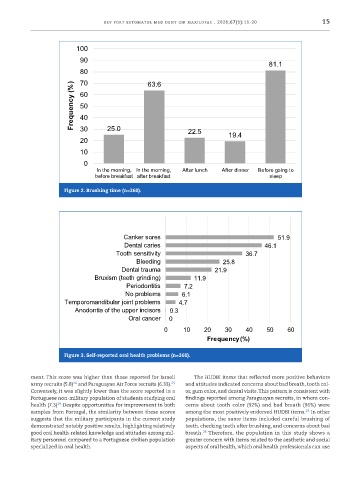
                      Figure 2. Brushing time (n=360).


                                          Canker sores                                       51.9
                                          Dental caries                                  46.1
                                        Tooth sensitivity                         36.7
                                              Bleeding                     25.8
                                         Dental trauma                  21.9
                                Bruxism (teeth grinding)         11.9
                                           Periodontitis      7.2
                                           No problems       6.1
                      Temporomandibular joint problems      4.7
                          Anodontia of the upper incisors  0.3
                                            Oral cancer  0
                                                       0      10     20     30     40    50     60
                                                                      Frequency (%)


                      Figure 3. Self-reported oral health problems (n=360).


           ment. This score was higher than those reported for Israeli   The HUDBI items that reflected more positive behaviors
                         24
           army recruits (5.8)  and Paraguayan Air Force recruits (6.33). 25   and attitudes indicated concerns about bad breath, tooth col-
           Conversely, it was slightly lower than the score reported in a   or, gum color, and dental visits. This pattern is consistent with
           Portuguese non-military population of students studying oral   findings reported among Paraguayan recruits, in whom con-
                    19
           health (7.3)  Despite opportunities for improvement in both   cerns  about  tooth  color  (92%)  and  bad  breath  (96%)  were
           samples from Portugal, the similarity between these scores   among the most positively endorsed HUDBI items.  In other
                                                                                                      25
           suggests that the military participants in the current study   populations, the same items included careful brushing of
           demonstrated notably positive results, highlighting relatively   teeth, checking teeth after brushing, and concerns about bad
                                                                    26
           good oral health-related knowledge and attitudes among mil-  breath.  Therefore, the population in this study shows a
           itary personnel compared to a Portuguese civilian population   greater concern with items related to the aesthetic and social
           specialized in oral health.                         aspects of oral health, which oral health professionals can use

