


Page 11 - SPEMD_67-1
P. 11
rev port estomatol med dent cir maxilofac . 2026;67(1):2-10              5


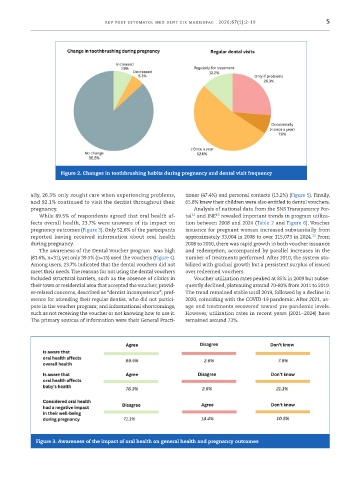
                     Figure 2. Changes in toothbrushing habits during pregnancy and dental visit frequency


           ally, 26.3% only sought care when experiencing problems,   tioner (47.4%) and personal contacts (13.2%) (Figure 5). Finally,
           and 92.1% continued to visit the dentist throughout their   65.8% knew their children were also entitled to dental vouchers.
           pregnancy.                                            Analysis of national data from the SNS Transparency Por-
              While 89.5% of respondents agreed that oral health af-  tal  and INE  revealed important trends in program utiliza-
                                                                 12
                                                                         13
           fects overall health, 23.7% were unaware of its impact on   tion between 2008 and 2024 (Table 2 and Figure 6). Voucher
           pregnancy outcomes (Figure 3). Only 52.6% of the participants   issuance for pregnant women increased substantially from
                                                                                                         12
           reported having received information about oral health   approximately 33,004 in 2008 to over 115,073 in 2024.  From
           during pregnancy.                                   2008 to 2010, there was rapid growth in both voucher issuance
              The awareness of the Dental Voucher program  was high   and redemption, accompanied by parallel increases in the
           (81.6%, n=31), yet only 39.5% (n=15) used the vouchers (Figure 4).   number of treatments performed. After 2010, the system sta-
           Among users, 23.7% indicated that the dental vouchers did not   bilized with gradual growth but a persistent surplus of issued
           meet their needs. The reasons for not using the dental vouchers     over redeemed vouchers.
           included structural barriers, such as the absence of clinics in   Voucher utilization rates peaked at 85% in 2009 but subse-
           their town or residential area that accepted the voucher; provid-  quently declined, plateauing around 70-80% from 2011 to 2019.
           er-related concerns, described as “dentist incompetence”; pref-  The trend remained stable until 2019, followed by a decline in
           erence for attending their regular dentist, who did not partici-  2020, coinciding with the COVID-19 pandemic. After 2021, us-
           pate in the voucher program; and informational shortcomings,   age and treatments recovered toward pre-pandemic levels.
           such as not receiving the voucher or not knowing how to use it.   However, utilization rates in recent years (2021−2024) have
           The primary sources of information were their General Practi-  remained around 73%.


             Figure 3. Awareness of the impact of oral health on general health and pregnancy outcomes

